A lot of businesses run on a process that’s manual, spread across spreadsheets, or hard to scale — tracking jobs over email, re-entering the same data in two or three places, or depending on one person who knows how it all fits together. We build the application that fixes that: software designed around how your business actually works, not fitted to a generic template.
What We Build
Three examples of exactly that — a process that was manual or fragmented, the application we built around it, and what changed.
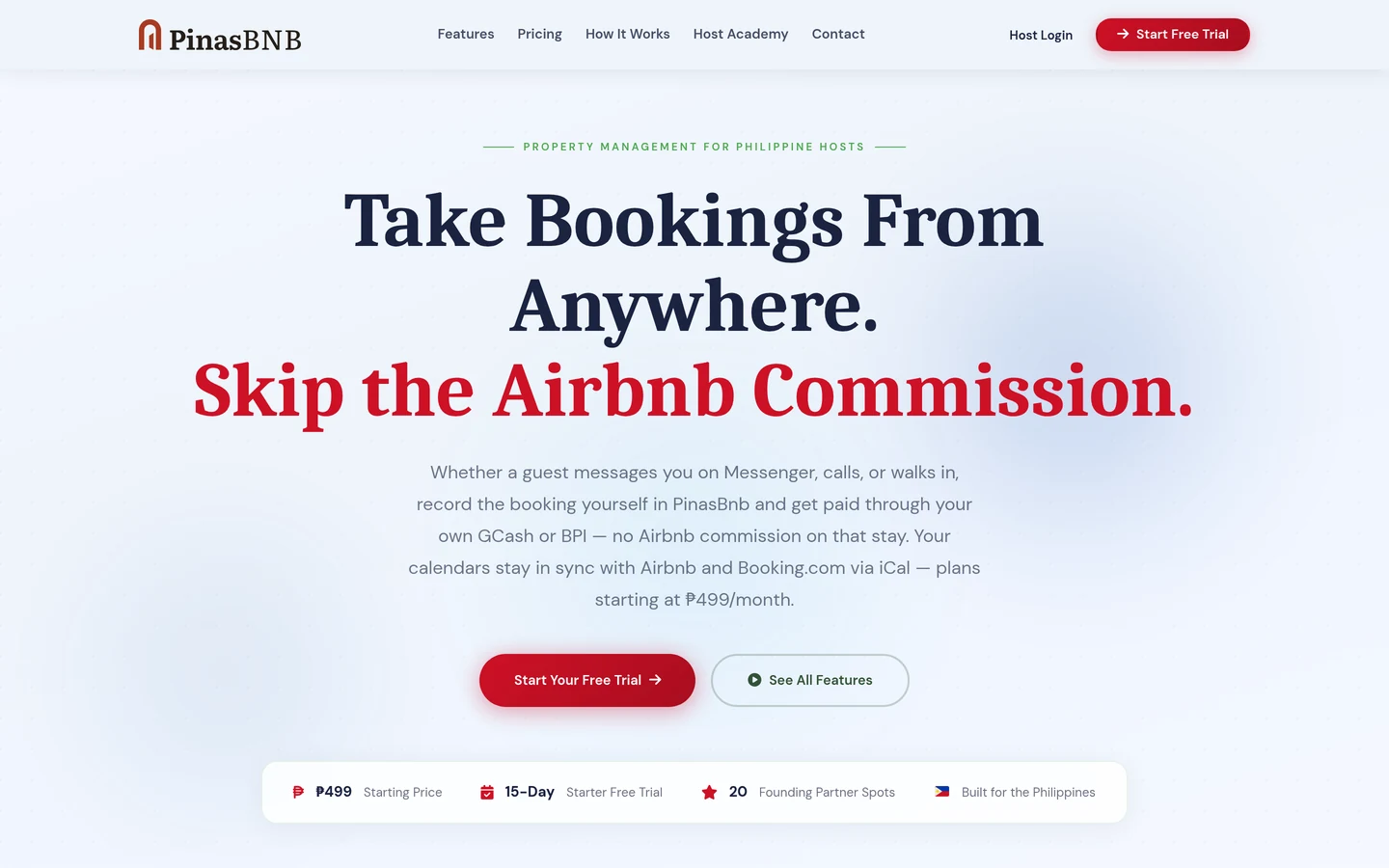
PinasBnb.com
Before: Vacation-rental hosts coordinating bookings, calendars, and payments by hand across more than one booking platform, with no single dashboard to manage any of it.
Application: PinasBnb.com — a direct-booking and property-management platform for vacation-rental hosts, with host dashboards, calendar synchronization across booking platforms, and integrated local payment processing.
After: One dashboard for bookings, calendars kept in sync across platforms, and payments taken directly — instead of juggling spreadsheets and separate logins for every booking site.
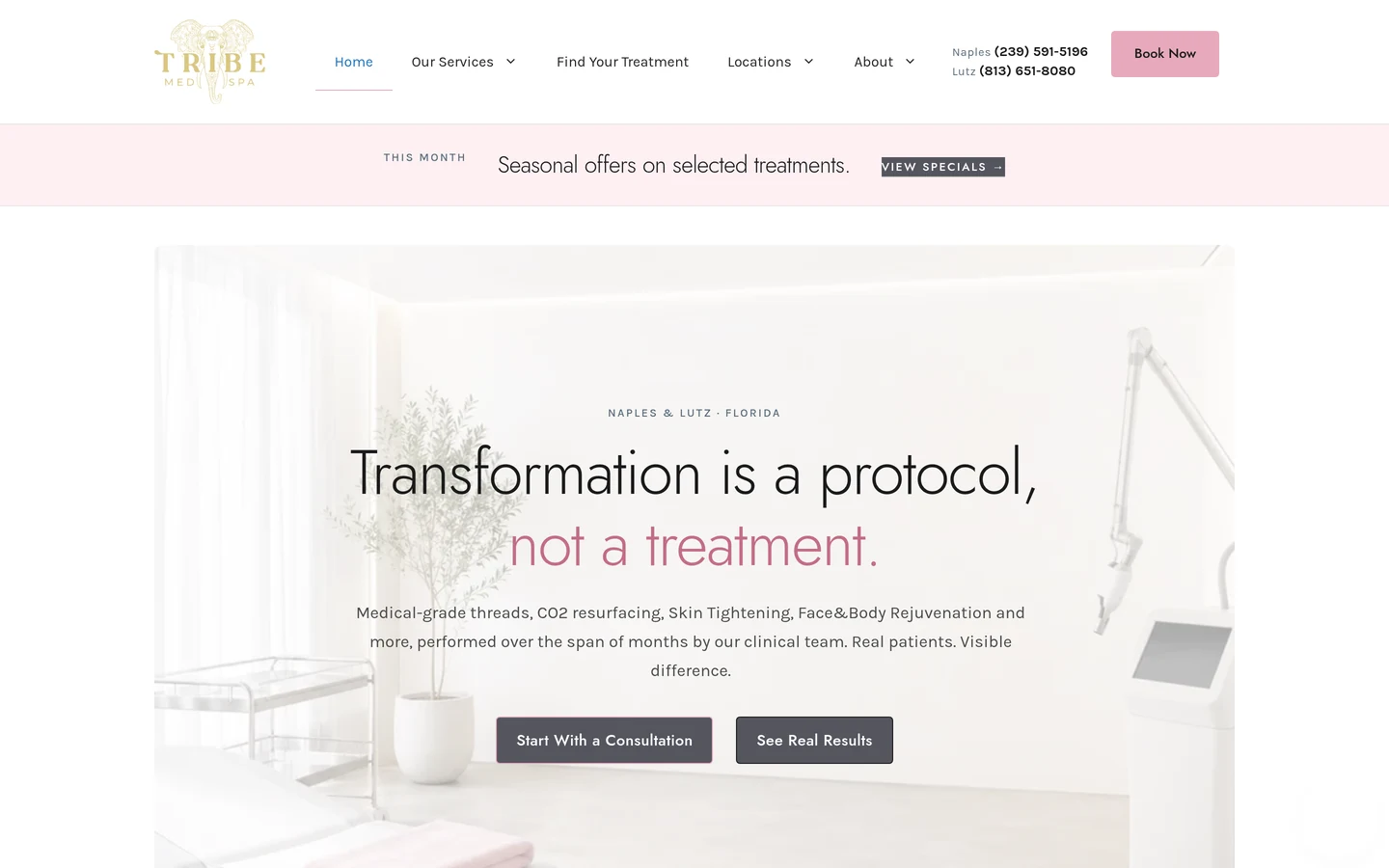
TribeMedSpa.com
Before: A multi-location medical spa business presenting its services inconsistently from location to location, with no single place for prospective patients to learn about treatments or request a consultation.
Application: TribeMedSpa.com — a website built for a multi-location medical spa business, covering service presentation, treatment information, and online consultation-request intake.
After: One consistent place for prospective patients at any location to learn about treatments and request a consultation online, instead of calling around or finding different information location to location.
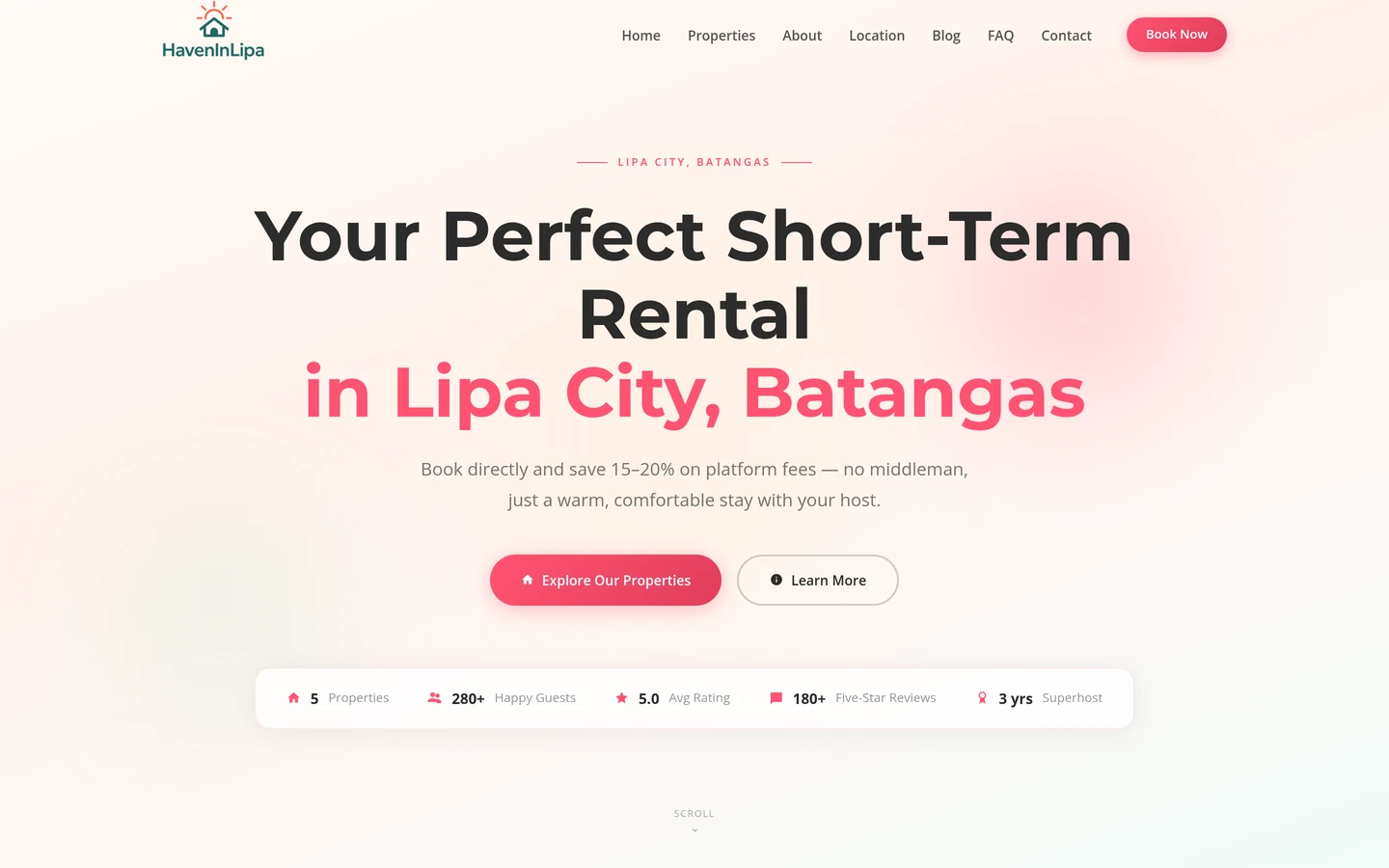
HavenInLipa.com
Before: A short-term rental property business with no direct-booking channel of its own, depending entirely on third-party platforms for every reservation and payment.
Application: HavenInLipa.com — a direct-booking platform for a short-term rental property business, with integrated payment processing and property listing management.
After: A direct-booking channel the business controls, with payments and listings managed in one place instead of depending entirely on third-party platforms.
How We Handle Security
Security is considered from the first design decision, not added after launch. We also run a dedicated Cybersecurity & Compliance Consulting practice, so the same discipline that informs that work shapes how we build applications. If your business needs to meet a compliance requirement or a vendor security questionnaire, that consideration is part of the conversation from day one.
Our Process
- Discover — We learn your business, your constraints, and what the application actually needs to do before we design anything.
- Design & Architect — We plan the application’s structure, data model, and security approach before writing production code.
- Build — Development happens in stages, with regular check-ins so you’re never surprised by what you see.
- Test — Every application is tested against the requirements it was built to meet.
- Launch — We deploy the application and confirm it works the way it’s supposed to in the real world, not just in a test environment.
- Support — After launch, we remain available to fix issues, make adjustments, and support the application as your business changes.
Who We Build For
We work with small and midsized businesses that need a senior technology partner but don’t have — and don’t necessarily want to build — an internal development team. If you’re trying to figure out whether to hire in-house, use a freelancer, or find a firm that can own the whole project, that’s exactly the conversation to have with us.
What a Typical Engagement Looks Like
A custom web application engagement typically takes approximately two to three weeks from the point requirements are finalized and approved. That said, actual timing always depends on the specific scope, what the application needs to integrate with, how quickly content and materials are ready, how many feedback rounds are needed, and whether requirements change along the way. We’ll give you a realistic timeline once we understand what you’re building — not a generic number that doesn’t hold up.
We work across a range of technologies depending on what the project actually needs, including Next.js, WordPress, and LAMP-stack application development, with data layers built on MySQL or PostgreSQL.
Frequently Asked Questions
How long does a custom web application typically take to build?
Most engagements run approximately two to three weeks after requirements are finalized and approved, though scope, integrations, and feedback cycles can extend that. We’ll give you a specific estimate once we understand your project.
Do you work with businesses that don’t have an internal IT team?
Yes — that’s who we build for most often. We can own the technical decisions so you don’t have to hire a department to get a serious application built.
What happens after launch — do you provide ongoing support?
Yes. We remain available after launch to address issues, make adjustments, and support the application as your needs change.
How is security handled during development?
Security is considered from the design stage, not added at the end. Because we also run a dedicated cybersecurity practice, the same discipline that informs our security consulting work shapes how we build applications.
What does an engagement cost?
Every project is custom-scoped. Rather than a one-size-fits-all price, we determine scope after a discovery conversation and provide recommendations aligned to your specific business requirements. Schedule a consultation to discuss what you need.